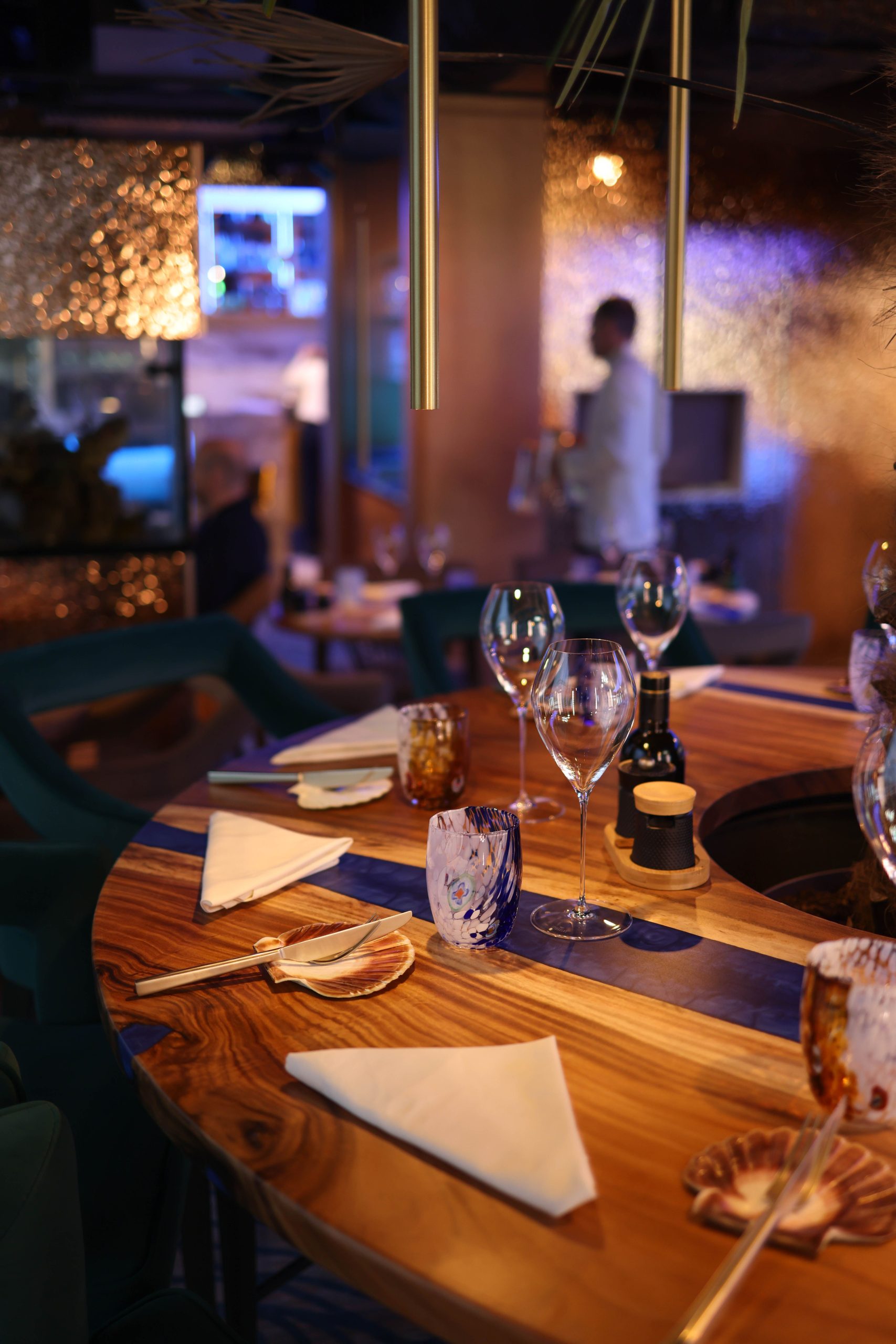
At a three-star restaurant, the couple at the corner table looks like every other couple. He orders for both. She asks the sommelier about the Sancerre. By the time the amuse-bouche arrives, the waiter has worked out which of them pays, and the room has already stopped noticing them. That is the whole skill of it: the performance is indistinguishable from a real date.
That corner table is also the exact spot where fine dining, luxury travel, and the top end of escort culture collide. Most people treat these as three separate worlds that happen to meet in hotel lobbies. I think that’s wrong.
They are one economy wearing three uniforms, and once you notice the shared stitching – the reservation, the suite, the concierge, the rule of discretion, the sale of time and attention – it is very hard to unsee it.
The dinner date is the product, not the prelude
Start with the meal, because that’s where the overlap is least deniable. A 2015 Vice feature on the fine-dining etiquette of a high-class Dutch escort agency is the most honest piece of market research I’ve read on this subject.
Society Service, then the Netherlands’ top agency, charged a minimum of 1,150 euros a night, and founder Marike van der Velden described men booking escorts for reasons that had little to do with a bedroom: companionship, business dinners, evenings they didn’t want to face alone.
“There are guys who hire an escort purely for companionship,” she said, “or because they enjoy fine dining and don’t have a partner to take to expensive restaurants.”
Her escorts weren’t expected to know which fork. They trained for three months in how to hold a champagne glass, how to make a toast, how to sit, who walks through a door first – the grammar of a room, not of a bed.
One of her women spoke five languages and was hired largely as an interpreter. The escorts were told to keep pace with the client’s etiquette, tip well enough that the staff stayed warm, and order nothing that would linger on the breath. The restaurant was the stage, and the escort’s job was to make the play look improvised.

This isn’t a corner of the industry; it’s the industry’s own self-description. A UK escort writing for Soundsphere put it plainly: on dinner dates, the meal is a “precursor to the dessert” – the part of the job she says she actually prefers, because business travellers far from home told her they felt they got “a more genuine human connection” from someone with nothing to hide and no facade to maintain. One client slid a folded A4 sheet of paper with £450 on it between the menu pages.
What the high-end market actually prices
The economics confirm it. A 2025 hedonic pricing study of the German escort market – the kind of regression analysis usually applied to housing or cars – found an average two-hour booking runs about €780.
The revealing part is the split: roughly 60 percent of the fee tracks physical attributes such as age, height and weight, while roughly 40 percent tracks what the study calls “intellectual-communicative attributes.” A doctorate and a particularly wide range of interests added €488 to the fee, pushing a single two-hour booking to €1,183.
Let that sink in. A substantial slice of a €1,183 date is priced conversation. The same study notes escorts are regularly booked as cultural-event or travel companions “where only a very small part of the booked time is spent on sexual activities.
The top of this market prices presence, languages, and the ability to hold a table – the exact skill set a sommelier, a private guide, or a great maître d’ is paid for.
| World | Representative price | What the money is actually buying |
|---|---|---|
| Fine dining – a three-star tasting menu | Median around $356 (€334) per person for three hours | A staged sequence of courses, the room, the service, the narrative |
| Luxury travel – one vacation for a typical affluent client | $10,000–$25,000 per trip | Bespoke access, privacy, convenience; friction removed |
| High-end escort companionship – a two-hour dinner date | Average €780; up to €1,183 with high cultural capital | Time, conversation, attention, a curated version of a person |
Sources: Chef’s Pencil analysis of 3,309 Michelin restaurants (April 2024); Luxury Travel Advisor Q2 2024 advisor survey; Reichel’s 2025 hedonic study of the German escort market. Prices exclude drinks and service; all figures are snapshots.
None of this describes the whole industry, and it’s worth saying that out loud. A 2026 review in PNAS of the economics of the U.S. sex market sketches a sharply two-tiered structure: indoor escorts earn around $4,000 a week seeing about four clients, while street workers make closer to $500 a week seeing seven.
These are different labor markets, not different marketing. The dinner-date economy lives at the top of that ladder – and that tier also recruits the way model agencies do, by casting call, which is a set of problems of its own.
Luxury travel, the same service with more zeroes
Now the travel. McKinsey’s 2024 survey of more than 5,000 travelers defined the luxury traveler as someone who spends $500 a night on a hotel room, and put the segment at $239 billion in 2023, heading toward $391 billion by 2028.
A third of that market, it found, is now people with under a million in net worth who are willing to spend like people with more. Luxury, increasingly, is a payment plan rather than a birthright.
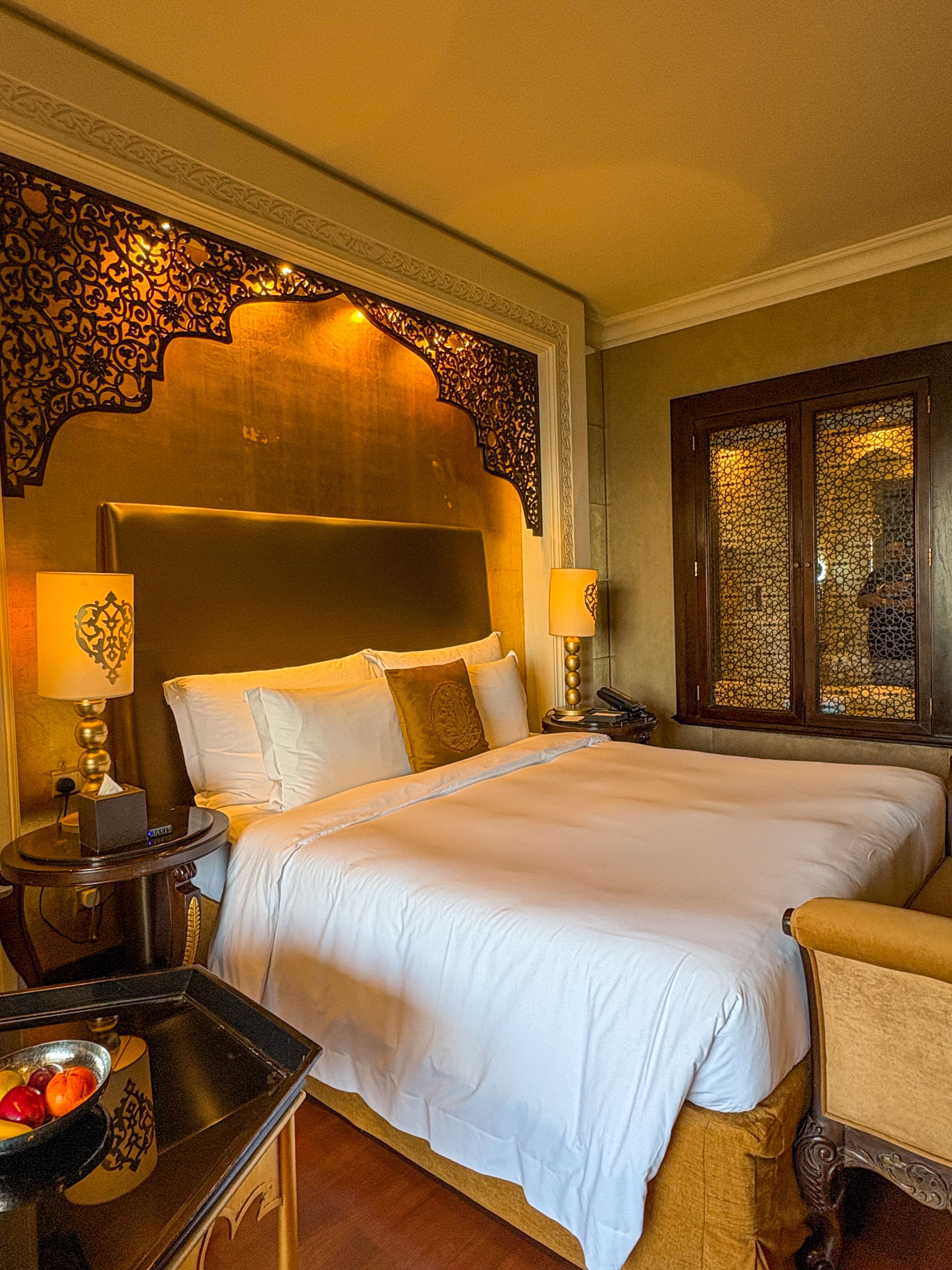
At that level, travel is almost entirely logistics and attention: a seamless itinerary, a car that appears, a table that was impossible to book, a suite with the lights already adjusted.
What the affluent traveler buys – the industry’s own surveys say it plainly – is the absence of friction and the presence of someone handling it all. A 2024 survey of luxury advisors put a typical client’s spend at $10,000 to $25,000 per vacation.
That is the same transaction as a high-end dinner date, at a different scale. It’s why agencies have quietly added travel to their menus – city breaks, resort weeks, the logistics pre-solved – and why a companion for a business trip is among the most requested bookings in the German pricing study.
The modern high-class agency has, in effect, become a concierge with a bedroom attached. Munich’s Louisa, for instance, sells the hotel arrangement, the restaurant reservation and the trip as one product, because the client isn’t buying a person so much as an evening – or a week – with every possible friction removed in advance.

Sociologist Ashley Mears spent eighteen months inside this exact convergence for her 2020 book Very Important People: the global “models and bottles” circuit of clubs, yachts and Riviera parties where beautiful women are recruited and comped – free drinks, access, trips – to raise the status of the men buying the champagne.
She found a single successful nightclub clearing $6 million a year on the strength of what she calls its “girl capital.” Nobody at that table would call it escorting, and much of it isn’t.
But the machinery – beauty as an asset that transfers status to whoever displays it, the bottle as a price signal, the party as the stage – is the machinery of every scene in this article.
Discretion is the load-bearing wall
All three worlds rest on the same structural rule: nobody is supposed to know how the sausage is made. The restaurant is a semi-public stage where a lie is performed beautifully; the hotel suite is the backstage where the performance can stop.
The Vice piece describes escorts trained to make a room believe a date is real – no kissing at the table, no phones, no attention on other men, a tip high enough to buy the staff’s discretion.
The same choreography runs in reverse at the private club and the five-star lobby: staff trained to know exactly who matters and never to say why.

What makes it all work is emotional labor – the work of seeming genuinely warm, on a schedule. The academic literature has a precise name for the high-end product: the girlfriend experience, offered to a middle- and upper-middle-class clientele, per a 2018 study in the journal Sociology that found escorts market an “authentic intimacy” carefully walled off from their private lives.
Sociologists call the arrangement bounded authenticity, and the unglamorous version of the insight is that it isn’t exotic. It’s the same deal your server, your flight attendant and your private guide make every shift: a true-feeling self, performed for money, switched off at the door.
The intriguing part is that the luxury industries have quietly returned the compliment. Fine dining’s whole romance is front-of-house theatre; luxury travel’s whole pitch is a concierge who anticipates you. Both are selling the girlfriend experience with the gender filed off. The escort who learns the wine list is catching up to a service sector that mastered her etiquette years ago.
The objection worth taking seriously
Before this gets too tidy, the counterargument. The strongest version isn’t that escorts don’t get taken to nice restaurants – it’s that calling any of this a “luxury service” launders the industry’s reality.
The Nordic-model position, encoded in Sweden’s 1999 law criminalizing the purchase of sex, treats prostitution as a form of gendered violence rather than a job like any other, and its adherents would say every champagne-and-conversation paragraph above is precisely the glamour the marketing exists to produce.
Even sympathetic scholars concede the mess: a 2018 analysis in Crime, Law and Social Change concluded the Nordic model exists “more as rhetoric and ideology” than as implemented policy in the countries that adopted it.
Where I land: the overlap is worth describing precisely because it cuts both ways. The tier that prices conversation and travel companionship is also the tier that recruits by casting call, and the industry’s defenders and critics agree that glamour and exploitation can occupy the same suite.
What the pricing data show isn’t that escorting is lovely; it’s that the luxury frame does real economic work, and pretending otherwise helps no one. What would change my mind: genuinely independent data on who works the high-end tier and how freely they entered it. That data doesn’t exist at industry level, and the absence is itself a finding.
So what actually explains the overlap?
Strip the ceremony and the answer is embarrassingly simple. A €334 tasting menu, a $15,000 resort week and a €1,183 dinner date are all the same purchase: a few hours in which the world behaves exactly as you scripted it, with someone in it who makes you feel like the story’s protagonist. Fine dining sells that with courses. Luxury travel sells it with an itinerary.
Escort culture sells it with a person. All three require the customer to believe – at least for the evening – that none of it is for sale.
That last sentence is the actual discovery, and it’s the uncomfortable one. The overlap isn’t a curiosity of the rich; it’s a working definition of modern luxury.
The person who can afford all three tables is buying the same thing three times: proof, purchased on demand, that their life reads the way it should. The dinner is the business. Everything else is the cover story – and the industry’s greatest skill, in all three rooms, is making the cover story feel like a first date.
How this article was put together
This piece grew out of a simple question – why do fine dining, luxury travel and escort culture keep showing up in the same hotel lobbies? – and it’s based on research done in August 2026.
The prices come from a 2025 hedonic study of the German escort market, a 2015 Vice feature on a Dutch agency’s dinner-date etiquette, McKinsey’s 2024 luxury travel survey, a 2024 Chef’s Pencil analysis of Michelin tasting menus, and a 2026 PNAS review of the U.S. commercial sex market; each figure carries the date it was current.
I focused deliberately on the high-end companionship tier; the wider industry includes far harsher realities, and the legal status of these services varies by country.
Disclosure: this post was commissioned by Louisa, a Munich-based high-class escort agency, and the other sources are independent. Prices drift, so treat every number here as a snapshot, not a contract.